
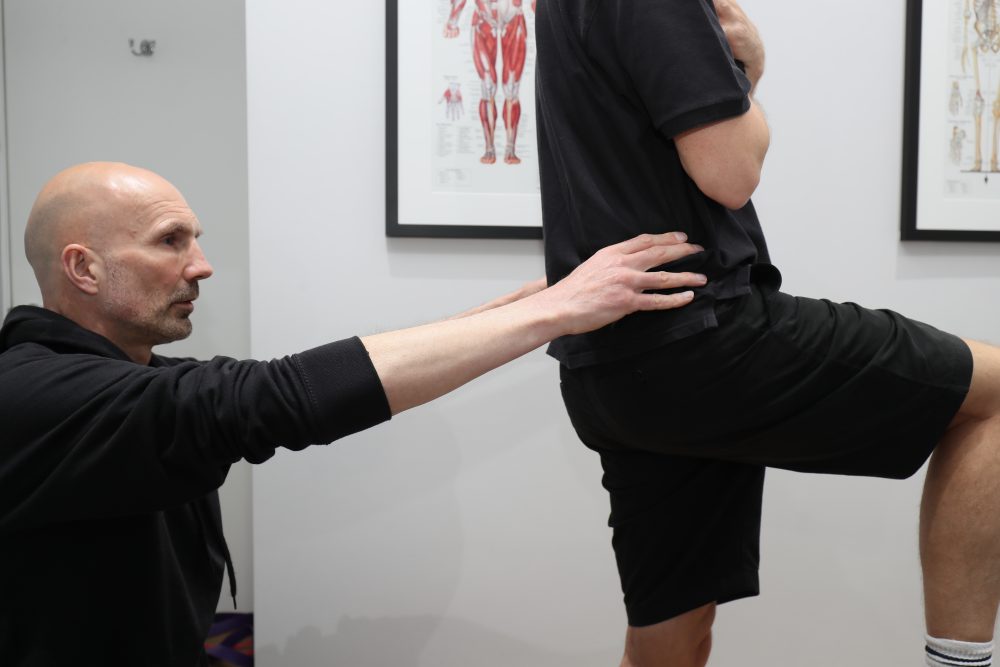
Men’s Health Physiotherapy
Many men have never heard of their pelvic floor until something goes wrong. Yet these small muscles play a vital role in bladder control, bowel function, sexual health and core stability. At Putney Physiotherapy, our specialist men’s health physiotherapists help men understand, assess and restore pelvic floor function so they can return to everyday life, sport and exercise with confidence.
The male pelvic floor is a network of muscles stretching across the bottom of the pelvis. These muscles support the bladder and bowel, surround the urethra, and work closely with the deep abdominal muscles and diaphragm to provide stability throughout the trunk. Every time you lift, run, cough or change direction, your pelvic floor is quietly working behind the scenes.
The prostate also sits within this system, surrounding the urethra just below the bladder. Because of this close relationship, prostate enlargement, inflammation or surgery can directly influence bladder control and pelvic floor function. At Putney Physiotherapy, we regularly assess these relationships to identify the true source of symptoms rather than simply treating the symptoms themselves.
The pelvic floor also contributes to erectile function by supporting blood flow and helping maintain erections. Healthy muscle coordination improves confidence during both physical activity and intimacy, making pelvic floor rehabilitation an important part of men’s health physiotherapy.
Running throughout this area is the pudendal nerve, which supplies sensation to the penis, scrotum and perineum while controlling many of the pelvic floor muscles. Irritation or compression of this nerve can contribute to persistent pelvic pain, numbness, altered sensation and discomfort when sitting or cycling. Our experienced physiotherapists provide comprehensive assessment and evidence-based treatment for these complex conditions.
Why the Pelvic Floor Matters
Although hidden from view, the pelvic floor performs an impressive number of essential tasks every day.
One of its primary jobs is maintaining bladder control. The muscles contract to keep urine in when needed and relax appropriately to allow normal emptying. If this coordination is lost, symptoms such as urgency, leakage or difficulty emptying the bladder can develop.
The pelvic floor also assists bowel function by supporting the rectum and allowing controlled relaxation during bowel movements. When these muscles remain tense, bowel emptying can become difficult and uncomfortable.
Sexual function depends heavily on healthy pelvic floor activity. These muscles contribute to erection quality, ejaculation and overall pelvic comfort. Improving muscle control often leads to better confidence and improved sexual wellbeing.
Finally, the pelvic floor forms part of the body’s deep core stability system alongside the diaphragm, abdominal muscles and lower back muscles. Together they help stabilise the spine during lifting, sport and everyday movement while reducing unnecessary strain through the pelvis.
Understanding Pelvic Floor Dysfunction
Pelvic floor problems are not always caused by weakness. In reality, dysfunction usually falls into one of three categories, each requiring a different treatment approach.
An Overactive Pelvic Floor
Many men actually have muscles that are too tight rather than too weak. Long hours sitting, chronic stress, heavy gym training, breath-holding and persistent muscle tension can all keep the pelvic floor switched on continuously.
This may contribute to:
- Pelvic pain
- Pain during sitting
- Difficulty emptying the bladder
- Urinary urgency
- Pain during ejaculation
- Chronic pelvic pain syndrome
- Pudendal nerve irritation
Treatment focuses on reducing muscle tension, restoring normal breathing patterns and improving relaxation before progressing to strengthening. At our clinic group we offer focused shockwave at Wandsworth Town.
A Weak Pelvic Floor
Weakness may develop following prostate surgery, prolonged inactivity or natural age-related muscle changes.
Common symptoms include:
- Urinary leakage
- Reduced bladder control
- Poor pelvic stability
- Reduced erectile support
- Decreased confidence during exercise
Our physiotherapists create progressive strengthening programmes designed specifically for each patient’s needs and activity goals.
Poor Muscle Coordination
Sometimes the muscles have adequate strength but fail to activate and relax at the correct times.
Poor coordination may cause:
- Delayed bladder emptying
- Urinary urgency
- Inconsistent bladder control
- Pelvic discomfort during movement
- Changes in sexual function
Re-educating muscle timing is often one of the most effective aspects of specialist men’s health physiotherapy.
Everyday Habits That Affect Your Pelvic Floor
Small daily habits can gradually overload the pelvic floor without you realising.
Breath-holding while lifting weights dramatically increases pressure through the pelvis, encouraging excessive muscle tightening. Long periods sitting at work or driving reduce circulation and can aggravate pelvic pain, particularly in cyclists and office workers.
Many men also unconsciously tighten their abdominal muscles or buttocks throughout the day, especially during periods of stress. Over time this constant bracing creates unnecessary tension within the pelvic floor.
High levels of stress can also keep the nervous system in a heightened state, making the pelvic floor more reactive and less able to relax normally. Learning how to breathe effectively, move well and reduce unnecessary muscle tension forms an important part of rehabilitation.
How Putney Physiotherapy Can Help
Every patient receives a detailed assessment to identify the underlying cause of their symptoms before treatment begins. Management may include:
- Specialist pelvic floor physiotherapy
- Individual exercise programmes
- Breathing and relaxation techniques
- Manual therapy
- Core rehabilitation
- Postural assessment
- Running and cycling advice
- Shockwave therapy where clinically appropriate for associated soft tissue conditions
- Education to improve long-term pelvic health
Our aim is not simply to relieve symptoms, but to restore normal movement, confidence and quality of life.
Whether you’re experiencing pelvic pain, urinary symptoms, erectile difficulties, persistent discomfort while sitting or recovering after prostate surgery, our experienced men’s health physiotherapists in Putney can help you return to doing the activities you enjoy with greater confidence.